Super Mario Bros. 3 was released for the Famicom in Japan on 23 October 1988 and reached North America on 12 February 1990, with Europe following on 29 August 1991. It was directed by Shigeru Miyamoto and Takashi Tezuka. Miyamoto said the game was conceived as a stage play, which is why the title screen opens with a curtain.
Nintendo spent US$25 million on marketing, and the game was previewed in the final scenes of the 1989 film The Wizard. More than 17 million copies were sold worldwide by 2000, a long-standing record for a cartridge not bundled with hardware. In Japan it sold about 3.84 million copies, second among Famicom games only to Super Mario Bros.
The game was remade in 16-bit form in the 1993 Super NES compilation Super Mario All-Stars and returned on the Game Boy Advance in 2003 as Super Mario Advance 4. It has since appeared on the Virtual Console for Wii, 3DS and Wii U, and on Nintendo Switch Online.12
Names and releases
| Region | Title on the box | Platform | Date | Publisher | Src |
|---|---|---|---|---|---|
| NA | Super Mario Bros. 3 | NES | Feb 12, 1990 | Nintendo | 1 |
| JP | スーパーマリオブラザーズ3Sūpā Mario Burazāzu SurīFamicom | NES | Oct 23, 1988 | Nintendo | 1 |
| EU | Super Mario Bros. 3 | NES | Aug 29, 1991 | Nintendo | 1 |
| JP | スーパーマリオコレクションSūpā Mario KorekushonRemake in the compilation known in the West as Super Mario All-Stars (1993) | SNES | Jul 14, 1993 | Nintendo | 2 |
| JP | スーパーマリオアドバンス4Sūpā Mario Adobansu 4Super Mario Advance 4: Super Mario Bros. 3 | Game Boy Advance | Jul 11, 2003 | Nintendo | 2 |
| WW | Super Mario Bros. 3Virtual Console | Wii | 2007 | Nintendo | 1 |
| JP | スーパーマリオコレクションWii re-release of the Super Famicom compilation | Wii | Oct 21, 2010 | Nintendo | 2 |
| WW | Super Mario Bros. 3Virtual Console | Nintendo 3DS | 2014 | Nintendo | 1 |
| WW | Super Mario Bros. 3Virtual Console | Wii U | 2014 | Nintendo | 1 |
| WW | Super Mario Bros. 3NES – Nintendo Switch Online; with netplay | Switch | Sep 19, 2018 | Nintendo | 3 |
Also known as: Sūpā Mario Burazāzu Surī JP1マリオ3 JP2SMB3 WW4Super Mario 3 WW4Супербратья Марио 3 RU4
Box art by region
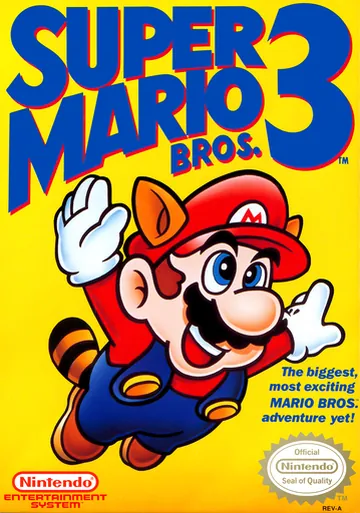
NA Super Mario Bros. 3 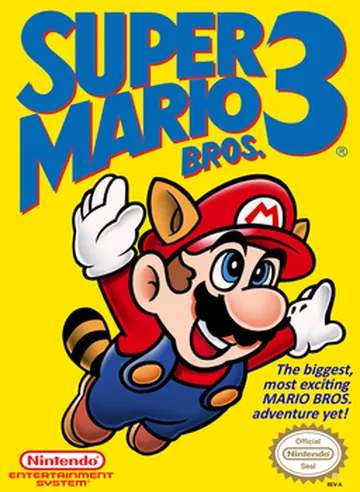
EU Super Mario Bros. 3 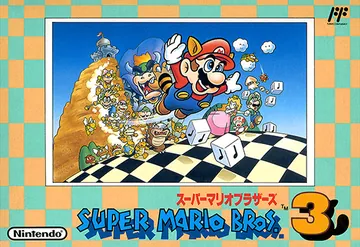
JP スーパーマリオブラザーズ3
Box art © its publishers, shown to identify each release. Scans: libretro-thumbnails.
Version differences
-
DifficultyNES (NA)
In the Japanese version any hit returns Mario to his small form; in the US version, a hit while in Fire, Raccoon, Tanooki, Frog or Hammer form only drops him to Super Mario.2
-
GameplayNES (NA)
The US version removes the boat after a warp-zone arrival, fixing a bug that could leave the player stranded at sea.2
-
GraphicsNES (NA)
Castle interiors use three pillars in the Japanese version and two in the US version, and some screen transitions were changed.2
Where to play legally today
-
Nintendo Switch Online Subscription
-
Nintendo Switch Online Subscription
Super Mario All-Stars (SNES – Nintendo Switch Online)
SNES remake
Checked: 2026-10-133gameinformer.com
-
Nintendo Switch Online Subscription
Super Mario Advance 4: Super Mario Bros. 3 (Game Boy Advance – Nintendo Switch Online)
GBA version
Checked: 2026-10-133gameinformer.com
Reception
Super Mario Bros. 3 sold more than 17 million copies worldwide by 2000 and is frequently called the best game on the NES; Computer and Video Games gave it 98%. In Japan it sold about 3.84 million copies, second among Famicom games only to Super Mario Bros.1
In lists
Sources
- 1en.wikipedia.org
- 2ja.wikipedia.org
- 3gameinformer.com
- 4ru.wikipedia.org
- 5ja.wikipedia.org
- 6ja.wikipedia.org
Checked: 2026-10-13Text reviewed: 2026-10-13
Spotted a mistake? Write to atlas@old-games.net.