Super Mario Bros. 2 is a platform game by Nintendo released in North America on 9 October 1988. Nintendo of America judged Japan's own Super Mario Bros. 2, later known as The Lost Levels, too difficult for Western players, so a different game became the Western sequel: a reworked version of Yume Kōjō: Doki Doki Panic, released for the Famicom Disk System on 10 July 1987 as a tie-in with Fuji TV's Yume Kōjō '87 event. The game reached Japan only on 14 September 1992, as Super Mario USA.
It plays differently from other Mario games. Enemies cannot be defeated by stomping; instead players pull up vegetables and throw items or other enemies. It was the first game where Princess Toadstool and Toad were playable, and the first to give Mario and Luigi different heights. Birdo, Pokey, Bob-omb and Shy Guy were introduced or popularized here and became recurring Mario enemies. The game has seven worlds: the first six have three levels each and the last has two.
Shigeru Miyamoto named it his favorite Mario game in 1999, citing the differences between the characters.123
Names and releases
| Region | Title on the box | Platform | Date | Publisher | Src |
|---|---|---|---|---|---|
| NA | Super Mario Bros. 2Spanish Wikipedia gives 10 October 1988 | NES | Oct 9, 1988 | Nintendo | 1 |
| NA | Super Mario Bros. 2Virtual Console, also EU/AU; JP 2014-03-19 | Wii U | May 16, 2013 | Nintendo | 2 |
| NA | NES Classic EditionBuilt-in game on the plug-and-play console; Japan's Nintendo Classic Mini: Family Computer 2016-11-10 | NES | Nov 11, 2016 | Nintendo | 2 |
| EU | Super Mario Bros. 2PAL; Mario Wiki lists Australia as 4 May 1989 | NES | Apr 28, 1989 | Nintendo | 1 |
| JP | スーパーマリオUSASūpā Mario USAFamicom | NES | Sep 14, 1992 | Nintendo | 1 |
| JP | スーパーマリオコレクションSūpā Mario KorekushonSuper Mario All-Stars; 16-bit remake titled Super Mario 2 inside the compilation (date as given by English Wikipedia) | SNES | Jul 14, 1993 | Nintendo | 1 |
| JP | Super Mario AdvanceGame Boy Advance launch title; enhanced remake | Game Boy Advance | Mar 21, 2001 | Nintendo | 1 |
| EU | Super Mario Bros. 2Virtual Console; NA 2007-07-02, JP 2007-08-10 | Wii | May 25, 2007 | Nintendo | 2 |
| JP | スーパーマリオUSASūpā Mario USAVirtual Console; NA 2013-07-11, EU 2013-08-07 | Nintendo 3DS | Nov 28, 2012 | Nintendo | 2 |
| WW | Super Mario Bros. 2Nintendo Switch Online (NES – Nintendo Classics) | Switch | Feb 13, 2019 | Nintendo | 2 |
| WW | Super Mario AdvanceNintendo Switch Online + Expansion Pack (Game Boy Advance – Nintendo Classics) | Switch | May 26, 2023 | Nintendo | 1 |
Also known as: スーパーマリオUSA JP2Super Mario USA JP1Super Mario 2 WW2Super Mario Advance WW1BS Super Mario USA Power Challenge JP1
Box art by region
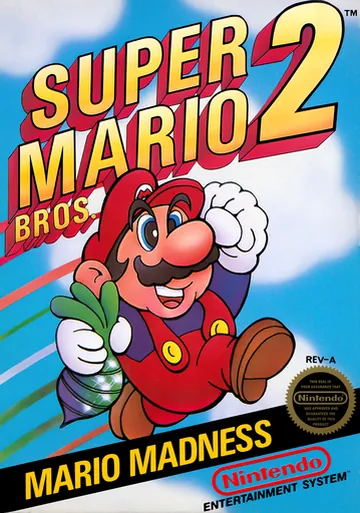
NA Super Mario Bros. 2 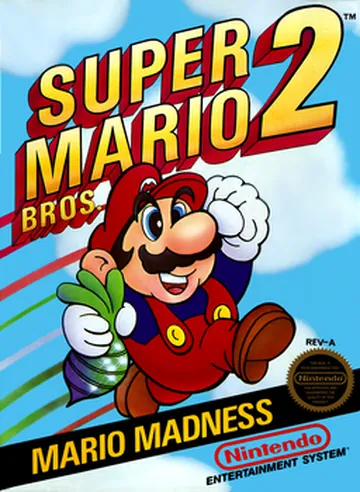
EU Super Mario Bros. 2 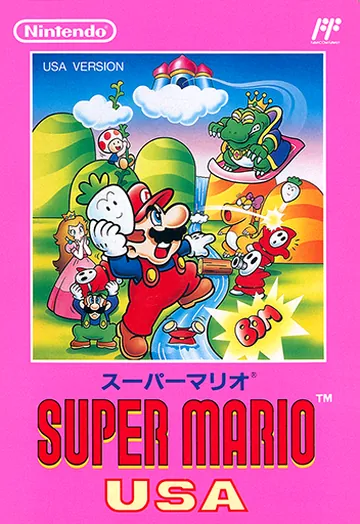
JP スーパーマリオUSA
Box art © its publishers, shown to identify each release. Scans: libretro-thumbnails.
Version differences
-
ContentDoki Doki Panic (FDS)NES
Super Mario Bros. 2 is a reworked version of the 1987 Famicom Disk System game Yume Kōjō: Doki Doki Panic: the Fuji TV mascot family was replaced by Mario, Luigi, Toad and Princess Toadstool, and the graphics and animation were redrawn.1
-
GameplayDoki Doki Panic (FDS)NES
Doki Doki Panic required clearing every level with each of its four heroes and had a save feature; SMB2 can be finished in one pass with any character, has no saving, and adds running with the B button.3
-
TitleFamicom (JP) Super Mario USA
The 1992 Japanese release was renamed Super Mario USA to avoid confusion with Doki Doki Panic and Japan's own Super Mario Bros. 2. Apart from a brown-and-black title screen it matches the US Revision 1, including the English names in the ending credits.4
Where to play legally today
-
Nintendo Switch Online Subscription
-
Nintendo Switch Online Subscription
Super Mario All-Stars (SNES – Nintendo Classics)
SNES remake (Super Mario 2)
Checked: 2026-10-135gameinformer.com
-
Nintendo Switch Online Subscription
Super Mario Advance (Game Boy Advance – Nintendo Classics)
GBA remake
Checked: 2026-10-135gameinformer.com
Reception
It was the best-selling video game in the US for fourteen consecutive months from October 1988. It sold 3.5 million copies in the US by early 1990 and 7.46 million worldwide, making it the best-selling NES game that was not bundled with the console.1
In lists
Sources
- 1en.wikipedia.org
- 2mariowiki.com
- 3ja.wikipedia.org
- 4tcrf.net
- 5gameinformer.com
- 6es.wikipedia.org
- 7ja.wikipedia.org
Checked: 2026-10-13Text reviewed: 2026-10-13
Spotted a mistake? Write to atlas@old-games.net.